Elliott Eugene Judd was born on September 13, 1841, in South Hadley, Massachusetts, one of twins born to Samuel (1806-1890) and Julia Ann (Swan, d. 1894). (His twin sister was Ellen Eugenia.)
In 1852 Samuel moved the family from South Hadley, where he had lived for some 46 years, to Grand Rapids where he entered into partnership with B. B. Church in the market business. Elliott entered the banking office of Daniel Ball as an office boy and then as teller for four years before joining the business of Benjamin Luce (who would become the sutler of the Third Michigan infantry) as his clerk. In 1864 Elliott returned to Grand Rapids and became a teller for the First National Bank. It appears that he never served in the military, unlike his older brothers George and Samuel.
In 1868 Elliot went into the hardware business with his brother-in-law, establishing the firm of Carpenter, Judd & Co., located at 15 Canal Street.
He was married in 1865 to Hattie G. Clay.
Although he had never served in the Old Third, Elliot nevertheless became quite active in the Old Third Michigan Infantry Association for many years after the war.
George Edwin Judd was born on March 23, 1838, in South Hadley, Massachusetts, the son of Samuel (1806-1890) and Julia Ann (Swain or Swaine, d. 1894).
Samuel and Julia were married on December 1, 1830 and by 1833 were residing in Avon, New York, although shortly afterwards they moved to South Hadley, Massachusetts where they were living by 1834 and indeed where they lived for some years.
In 1852 Samuel moved the family from South Hadley, where he had lived for some 46 years, to Grand Rapids where he entered into partnership with B. B. Church in the market business. After working for a short stint as a drayman for Martin Brothers and then clerking in a general store in Lamont, Ottawa County, George joined his father’s firm in 1855 and succeeded Samuel to the business in 1858 when his father became crier of the U.S. Court. George married Lucinda Beach (1838-1887) on September 23, 1859, in Grand Rapids, and they had at least two children: Julia (b. 1860) and George H (b. 1861).
By the late 1850s George was working as a butcher and in 1859-60 was operating a meat market at the corner of Monroe and Greenwich Streets opposite the National Hotel in Grand Rapids, and living at 55 Fountain, between Division and Bostwick Streets. In 1860 he was still employed as a butcher and living with his wife and child in Grand Rapids, First Ward. In addition to his business obligations George was also a volunteer fireman, and was elected First Assistant Foreman of the Niagara Fire Company No. 2, on November 25, 1858.
When George resigned from the fire company in order to enlist in the Third infantry Regiment then forming at Cantonment Anderson in Grand Rapids, the members of the company passed a series of resolutions praising his past performance and his present patriotism. “At a special meeting,” noted the
Grand Rapids Enquirer on July 14, “of Niagara Fire Company No. 2, held at their engine house last evening, the following resignations were handed in and accepted by a vote of the members present, to wit: George E. Judd, Foreman.” There followed a preamble and resolution which was passed unanimously by the fire company. “Whereas, Geo. E. Judd, our late Foreman and for years past one of the most efficient and active members of the company, has volunteered and gone to serve his country in the war for the Union,” it was therefore, “Resolved, That the sincere thanks of the members of Niagara Fire Company No. 2, are [due] to Geo. E. Judd . . . and are hereby tendered them for their meritorious conduct and services in the Fire Department of this city, while members of No. 2; and that the hearts of their late comrades will accompany them in their glorious mission, under the stars and stripes . . . in fighting the fiery elements.”
Besides his volunteer fire work, in 1858 George also served in the Valley City Guard, one of Grand Rapids’ local militia companies, joining his older brother Samuel who was Second Lieutenant of the VCG. George soon became one of the noted marksmen in the company. In the spring of 1859, the VCG, “numbering 25 guns under the command of Captain Byron R. Pierce, and accompanied by the German Brass Band, were out yesterday afternoon on their fourth target excursion. The company marched to a vacant lot near the old slaughter house, when the target was erected at a distance of 12 rods from the line. Major [Stephen] Champlin, Paymaster [Robert] Collins and Captain [John] Fay, were selected as judges. After each member had fired three shots, the judges reported the best string shot to have been made by Color-Sergeant Thomas Greenly, whose average shot measured 7 and 3/16 inches; second best, Geo. Judd.” (Pierce, Champlin, Collins and Greenly would all serve int he Third Michigan.)
On March 19, 1860, George was elected Fourth Corporal of the VCG, and according to one report by the time war broke out George was Second Sergeant of the Valley City Guard. Many former members of the VCG formed the nucleus of Company A, and George was 23 years old when he enlisted as First Sergeant in Company A on May 13, 1861, along with his brother Samuel who was Captain of Company A.
By mid-August an opportunity arose for George to become commissioned. According to George Miller of Company A, by the second of August Company A’s First Lieutenant Fred Schriver had been promoted to Captain of Company B (replacing Captain Baker Borden who had resigned and gone home to Grand Rapids). “So,” wrote Miller on August 11, “that left a chance for promoting our orderly [George Judd, and he] is 2nd Lieutenant now.” In fact, George was commissioned a Second Lieutenant on August 1, 1861, then promoted to First Lieutenant, on October 28, 1861, and by the first of the new year had returned home to Grand Rapids on a furlough.
George soon returned to the Regiment and was wounded in the left arm on May 31, 1862 at Fair Oaks, Virginia, at the same time his brother Samuel, still commanding Company A, was killed. Dan Crotty of Company F, wrote some years after the war that Judd, having lost an arm and a brother at Fair Oaks, “has given his mite to the cause of freedom, and it is hoped that Lieutenant Geo. Judd will survive his great loss.”
(On May 17, 1897, the
Grand Rapids Herald published a story recounting a visit to the Fair Oaks battlefield by N. L. Avery, the man who had brought back Samuel Judd’s body to Grand Rapids in 1862. One of the places he visited was the only “building left as a landmark on the battlefield, and its bullet scarred boards left no question of identity. This was a small frame dwelling, badly shattered with bullets and bearing the marks of time and decay. Near this house at the time of Mr. Avery’s first visit stood a small corn house, but it had disappeared. In this corn house, with a shattered arm giving excruciating pain, lay Capt. George E. Judd on the night of the battle of Fair Oaks.”)
Notwithstanding the loss of his arm, George Judd was appointed and commissioned Captain of Company A on June 23, 1862, replacing his dead brother, and subsequently absent with leave on recruiting service in Michigan through December. Interestingly, while at home on furlough George apparently ran for an elected office in late 1862.
According to Charles Wright, writing home on November 13, 1862, he says simply “I am glad [Francis] Kellogg is elected” congressman, and I am “also glad George Judd is defeated.” Wright fails to explain whether he meant he was happy that Judd was not elected because he was not worthy of the post or that he wished him back with the company. Judd was reportedly still at home in Grand Rapids as late as April of 1863, and indeed he remained in Grand Rapids through most, if not all, of 1863 as well.
Being home, however, was no guarantee of safety. The
Grand Rapids Eagle reported on Wednesday, June 10, 1863, that Judd, who the paper described “as one of those unfortunates whom ‘unmerciful disaster followed fast and followed faster’,” had “met with a severe accident last evening. The Captain, as is well known, has been in this city ever since the battles of last July before Richmond, in which he was wounded, losing an arm at the shoulder joint. This frightful wound is not yet thoroughly healed; and last evening, while driving out with his wife and child, on the west side of the river, the wagon was upset, throwing him out and breaking one of his legs just above the ankle, beside otherwise bruising him. Luckily his family escaped any serious injury. The Captain is doing well this morning we learn, though this second shock will prove a severe test of his fine constitution, even if the old wound does not become inflamed from sympathy and trouble him again.”
By the end of July the
Eagle reported that it was “glad to see Capt. Judd upon our streets again every fine day. The Captain is fast recovering from his hurts, and his broken leg is getting along finely. In about a fortnight, he will be able to walk without a sling or crutch, probably. It will be remembered that the Captain overturned from a buggy, while riding out a few weeks since, and very badly injured.” Although he had still not recovered by August 1, he was able to walk about with the aid of crutches.
Judd was eventually transferred to the Veterans’ Reserve Corps on January 24, 1864, and assigned to the Department of the Northwest to command draft rendezvous and Indian prison at Fort Kearny, in Davenport, Iowa; and by June of 1864 he was commanding two companies in that place. (The inmates were reportedly participants in the 1862 Sioux uprising.)
In early September, he again returned home on furlough, and on September 8, the
Eagle reported that Judd, “who is now and has been for some time past in command of the Draft Rendezvous and Government Indian Prison, at Davenport, Iowa, has, with his family, just returned on a short visit to his parents and numerous friends in this city. -- The Captain lost one arm, fighting for the Stars and Stripes, but he has one good arm still left, which it does a loyal men good to shake.” He soon rejoined his command in Iowa and on October 13 he wrote a letter home to his father, dated Camp Kearney, Davenport, which the
Eagle, a decidedly Republican newspaper, reprinted for its readers. “Dear Father,” he wrote,
I received two papers from you this day. I see by them, there is a considerable political excitement in Grand Rapid at this time. I think every honest man ought to know how to vote in the coming election. Some may think that, because I was such a supporter of McClellan, I will support him in this campaign. But I tell you I won’t; I would sooner cut off my only arm. What! support a man that will step on such a hellish platform as was gotten up at Chicago? No sir! I would curse you if you would support such a platform, and you know how I love you.When I accepted a nomination in 1862, on the “Union” platform, I did so honestly. I did it because I would not lend any help to a man I believed to be dishonest. I then said I was satisfied with President Lincoln, and supported him in everything that he was doing. I support him now with all my heart.My Lieutenant is an old Democrat and a great McClellan man; but he thinks just as I do. We think we should be fools to support a man that is in favor of an armistice with the rebels and men who send resolutions sympathizing with our brave army in the sufferings they have endured since the war broke out in a fruitless attempt to quell the rebellion, they say.They are traitors, the whole pack of them; and any man who has been in the army and will support them, is a fool, and, I think, a knave. At all events he ought not be thumped on the head. We are all well and would love to go home, but don’t know when we can. By early November Judd was again home in Grand Rapids and, according to one observer, was “looking and feeling first rate.” He soon returned to Iowa and was reported in command of Company K at Fort Kearny in February of 1865.
Following the end of the war Judd was employed by the newly created “Freedman’s Bureau” from 1866 to 1870, and spent most of his time in Tennessee. On January 10, 1867, the
Eagle reported that Judd “is in town, on a visit to his home. He is from Nashville, Tenn., and represents times as dull in that section of the country.” However, while stationed in Nashville, Judd wrote a lengthy report to his father in Grand Rapids, in which he discussed in detail the state of affairs in the south. On July 18, 1868, Judd wrote that
We are having terrible hot weather -- thermometer up to 110. We have had plenty of rain here, but in some portions of the State they have had no rain for six weeks, and the crops are ruined. The sections where they are suffering the most are the worst rebel counties of the State, and, I think, if the people of the north are willing to let them alone, in their great wickedness, God is not.Night before last the citizens of this city held a big meeting to ratify the nominations of Seymour and Blair. It was the biggest turnout of the kind I ever saw; there were at least 10,000 people. Their banners bore all sorts of threatening inscriptions against the Yankees and all who love their country. I tell you, if they should get into power in this country, the Union people will have to leave in a hurry. The Ku Klux Klan are constantly riding over the country, whipping and killing the negroes. There is a perfect reign of terror throughout middle Tennessee. It is the intention to frighten the negroes, so they will not vote at the coming elections, and they will succeed unless something is immediately done to protect the Union people. Complaints come to me every day, of outrages committed. Negroes are fleeing to the cities for protection. They have to leave their homes, and families, and the crops they have made up to this time.I think the Governor will call out the militia; if so, the matter will soon be brought to a head. I believe there will be a fight; for I think the [KKK] have a force large enough, and are well enough organized, to give the militia a hard one; and I believe they intend to do it. I am anxious to know what they intend to do. -- If they mean fight, the sooner they are at it the better. George eventually returned to Michigan.
He was a Republican and served as a member of the state legislature from the southern district of Kent County in 1868. By 1875 he was operating a grocery business at 32 South Division, where, the
Grand Rapids Democrat reported on May 16, 1875, “He keeps no books, but a cash book, and on that principle will surely thrive.”
In 1868 Judd was commissioned a Second Lieutenant in the regular army, and in May of 1870 was promoted to Captain and placed on the retired list. He returned to Grand Rapids where he lived the remainder of his life, and in 1865-66 he was back living at 55 Fountain Street. In 1870 he was living with his wife and son in Grand Rapids’ Third Ward where he worked as a hardware dealer (and owned some$10,000 worth of real estate). It is uncertain what became of their daughter Julia.)
His business interests were varied. On May 11, 1876, the Democrat reported that he “has erected a handsome public building upon his grounds at the west end of Reed's lake. It will be managed during the season by two gentlemen from Cedar Springs who will have a nice lot of row boats and other conveniences for pleasure seekers.” And on May 17 the
Eagle reported that Judd “has sold out his entire stock of groceries. He will devote his entire attention to butter, eggs, etc. at wholesale.”
By 1880 George and his wife and son George were living in Grand Rapids Township. In fact, he built a home near Reed’s Lake, and the
Democrat reported on January 15, 1880 that it had recently been burglarized, “and some $150 worth of property carried off, including a gold watch and neck chain belonging to Mrs. Judd, some silver spoons and napkin rings, and a few dollars in silver. A coat and some other articles were taken but left in the back yard. In the morning a back window was found open and the front door unlocked.” No arrests were made.
Judd ran for Chief of Police in 1880 but lost to J. L. Moran, and in March of 1883 ran for City Marshal on the Republican ticket, and who was advertised as “Elect the Veteran.” He lost again, but he did serve as member of the Michigan State legislature as a Republican from the Second district, Kent County, from 1889 to 1890, and was a deputy United States Marshal for the western district of Michigan from 1890 to 1894. He was living in Whitneyville, Kent County in 1888, but moved back to Grand Rapids where he was living in the Second Ward by 1890 and 1894 (possibly at 13 Park Street in 1890).
In 1896 he was chairman of the Kent County Republican committee and directed the campaign of that year. He was a member of the Loyal Legion, the Old Third Michigan Infantry Association and Grand Army of the Republic Custer Post No. 5 in Grand Rapids, and on January 20, 1882 he was elected vice president of the Mendelssohn Club. He gave a sworn statement in the pension application of Lee Kelly, also formerly of Company A.
No pension for George seems to be available.
From 1899 to 1905 George served as commandant of the Michigan Soldiers’ Home (which carried with it the rank of Colonel). On December 3, 1900, the
Democrat reported a story that probably typified Judd’s popularity at the Home.
It is evident that, although Mayor Maybury of Detroit was not elected governor, something he said when he addressed the veterans of the Soldiers' Home at North Park impressed them very thoroughly. He told them that, if elected, he would appoint a man for commandant whom they themselves desired. The fact that the result of the election was adverse to the Democrats has not disillusioned the veterans from the idea that they would like a commander of their own choosing and they have begun an active campaign to secure the re-appointment of the present head of the institution, Col. George E. Judd. From all that can be learned, the colonel is immensely popular with those under him and those who would not like to see him continue in his present office are few and far between. So long as it is ordained that the next commander must be a Republican, no other name appears so favorably received as that of the colonel. The action which the veterans are taking in the matter is in the shape of several petitions, worded alike and addressed to Colonel Bliss of Saginaw, as governor-elect of the State of Michigan. Librarian Gardner, who has charge of the collection of reading matter belonging to the institution, Sergeant Crumback, in charge of the second floor of the main building, and others were instrumental in placing these petitions where they would come to the attention of the old soldiers.The petitions have been ‘floated’ for about two days and already have practically the entire membership of the home represented in signatures. Democrats as well as Republicans are reported as having signed and the lists are long. Copies of the petition have been left in the offices of each of the sergeants on the three floors of the main building and in the dormitory. On one floor it is reported that every man signed save one, who refused on the ground that he “never signed a petition in his life and never would.”It appears that, aside from the strong desire to keep Colonel Judd in the Home, a feeling of hostility toward Manager Northwood is entertained by many of the residents who have been in the Home for some time. The cause of this is hostility dates back to three years ago, when, in an address to the veterans in the chapel, Mr. Northwood, it is alleged, told them that ‘beets and rice’ were enough food for them. This, as it is now reported, was said in connection with references to lessening expense of running the Home.The petitions, when entirely ready, will be sent to Colonel Bliss, probably in Saginaw, as it is expected they will be forwarded before he shall take his oath of office as governor. Colonel Judd himself has been ailing for the past day or two, but was reported better last night. As commandant at the Home Judd frequently found himself in a position of having to become a virtual guardian for some of the residents at the Home. On Monday June 20, 1904, the
Herald reported that
The frequency with which the probate court is called upon to appoint a guardian for some alleged mentally incompetent inmate of the Soldier's home has in some way been construed by a number as attributable to Colonel Judd's desire to have sole charge of the unfortunate's business affairs.However, this is not true, as is seen from the following statements made by him relative to the subject.“There are probably 100 men on the rolls of the Soldier's home today,’ said Colonel Judd yesterday, ‘who are unfit to handle their own affairs and need guardians. As a matter of fact of the 1,000 names on the record only about 30 have had guardians appointed. “People seem to think I am anxious to act as guardian over these men. The truth of the matter is, that it is the most unpleasant task I have to perform. The board has authorized me to act as guardian merely because it saves the soldier from paying the guardianship fees. “You have no idea how many people there are watching their chance to bleed these men as soon as they have any money. It is possible for a guardian to take every cent of pension money. The regular fee is 5% of all money received and a guardian may charge for every letter written or other service rendered. “I am at present acting as guardian for 18. I have recommended the Michigan Trust Company to act in that capacity, and it has accepted in three or four cases.“When do I think a man needs a guardian? Only when he is so old he is mentally incompetently or an habitual drunkard. We have several who are able-bodied and would be able to earn a good living if they could leave drink alone. As it is, they can not get employment and their friends will not have them around. “When any member of the home wishes to leave he is entitled to a discharge, but the state law says he shall not be reinstated until three months have passed. “We have many cases where the men leave the home with their savings and in two or three weeks ask to be taken back again. Relatives beg us to relieve them of the burden of their presence, and County authorities object to looking after them. They are allowed to come back if they will accept a guardian.“Remove the guardianship from these men, give them discharges and the money coming to them and they would be back in a short time penniless and helpless asking for readmission.” Indeed, although he was often controversial in his handling of undisciplined and unruly residents, as commandant of the home that Colonel Judd demonstrated
his ability as an organizer and as a disciplinarian was shown to the best advantage. He raised the home to the high standard of excellence it enjoys today, and personally superintended the beautifying of the grounds until they are recognized all over the state as being the finest kept grounds of any state institution. Strict when any infringement of order was concerned, [he] could not witness suffering unmoved, and would give counsel and assistance at all times. Like all strong natures, he hid his emotions under a mask of apparent indifference which strangers might have termed the real thing. When funerals took place at the home, Colonel Judd was rarely able to stand the strain of attending the funeral service. But, from his rooms, the lonely cortege winding up the hillside was in plain view, and a strong man's tears would course down his face as he listened to the long, lonely, last reveille. The high esteem in which Colonel Judd was held by members of the home was shown when, at the conclusion of the longest term ever held by any commandant, the entire membership of the home turned out in dress parade, to present him with embossed testimonials and the gift of an immense arm chair as a token of their appreciation of his services. In mid-September of 1905 George suffered a stroke and remained in critical condition until he died of apoplexy at 12:00 p.m. on September 28, 1905, at his home at 81 South Prospect. He “was at no time,” wrote the Press on September 28, “more than partially conscious. He did not appear to suffer much, but medical skill, even though aided by his powerful constitution, was not able to relieve the brain of the blood clot and death ensued. Col. Judd began to sink yesterday afternoon and all through the night and early hours of today became gradually weaker until he passed quietly away.”
The funeral service was conducted by Rev. R. W. McLaughlin of Park Congregational church in Grand Rapids and was held at his home at 3:00 p.m. on September 30. He was buried in Oak Hill cemetery: K-56.
In its obituary of September 30, the
Grand Rapids Press printed the official announcement made to the residents of the Home. “‘Comrades - A brave, true-hearted and noble man and soldier has left us. Col. George E. Judd, for over 6 years commandant of this home, died yesterday. His record as a soldier was without blemish, and he was an honored, useful and upright citizen of Grand Rapids for over 50 years. As commandant of this home he governed with firmness and impartiality, and its members had no warmer friend or one more watchful of their comfort and interest than he. In common with the community where he lived for so many years, we mourn his loss. Out of respect to the memory of your former commandant the post flag of this home will be placed at half-mast and so remain until after his funeral.’”
Samuel Adolphus Judd was born on May 11 or 21, 1834, in South Hadley, Massachusetts, the son of Samuel 1806-1890) and Julia Ann (Swan, d. 1894).
Samuel and Julia were married on December 1, 1830 and by 1833 were residing in Avon, New York, although shortly afterwards they moved to South Hadley, Massachusetts where they were living by 1834 and indeed where they lived for some years.
Sometime around 1852 Samuel (elder) moved his family from South Hadley, where he had lived for 46 years, to Grand Rapids, and joined into partnership with one B. B. Church in the market business. In 1855 he brought his son George into the business, and by 1858 Samuel Sr. had left the firm to become crier for the U.S. Court. In 1859-60 Samuel was living on the north side of Park between Division and Bostwick Streets in Grand Rapids, and in the spring of 1860, Samuel A. entered into a co-partnership with one E. Powers “for the purpose of carrying on the business of the bakery and confectionery business.” Their store was opposite R. E. Butterworth’s block of buildings on Monroe Street.
Samuel A. married South Hadley native Clarissa Louise Smith (1834-1922) October 25, 1854, at the Congregational church in South Hadley, Massachusetts, and they had two children: William Elliott (b. 1855) and Jennie Eugenia (b. 1858).
By 1860 Samuel was operating a flour and feed store and living with his wife and children in Grand Rapids, Third Ward. When the war broke out he was also serving as a volunteer fireman having been elected assistant foreman of Hook and Ladder company 1, and Treasurer of the Fireman’s Association.
During the late 1850s, Samuel A. and his brother George E. both became actively involved in the development of the Valley City Guards (VCG), a local militia company organized in Grand Rapids in 1855. Sam Judd was elected Second Lieutenant of the VCG on February 12, 1858, and elected First Lieutenant on April 24, 1859.
According to one observer Samuel was a superb marksman. On May 28, 1859, the VCG, “numbering 25 guns under the command of Captain Byron R. Pierce, and accompanied by the German Brass Band, were out yesterday afternoon on their fourth target excursion. The company marched to a vacant lot near the old slaughter house, when the target was erected at a distance of 12 rods from the line. Major [Stephen] Champlin, Paymaster [Robert] Collins and Captain [John] Fay, were selected as judges. After each member had fired three shots, the judges reported the best string shot to have been made by Color-Sargeant Thomas Greenly, whose average shot measured 7 and 3/16 inches; second best, Geo. Judd. The best single shot, and the only one in the ‘bull's eye’, was made by Samuel Judd.” He was elected as Captain on December 3, 1860, when Captain Byron Pierce resigned.
Samuel was 27 years old when he enlisted as Captain of Company A on May 13, 1861, along with his younger brother George, and indeed the VCG would form the nucleus of Company A. When the Regiment embarked on two boats at Detroit on the evening of June 13, 1861, “Captain Judd,” wrote George Miller of Company A, and Lieutenant Fred Schriver, also of Company A, “were accidentally left but they took the next boat and came after us, they overtook the rear train at Pittsburg, they overhauled our train just before we got to Harrisburg [Pennsylvania]. Our train had stopped for something when the second train came up, Captain Judd and the Lieutenant came up and joined us, as they came walking up they were greeted with 3 heavy cheers from our boys who swore they would not go through Baltimore without Captain Judd.”
While in camp, one of Judd’s responsibilities, according to Charles Wright of Company A, was to hand out the mail to the members of his company, and “When the mail came in to our camp our boys all crowded around captain Sam Judd expecting to get news from their friends. . . .” At some point after the Regiment went into its winter quarters Clara Judd joined her husband. On January 15, 1862, Wright wrote home to his sister that “They live in a log house, close by, that I and the boys built for him.”
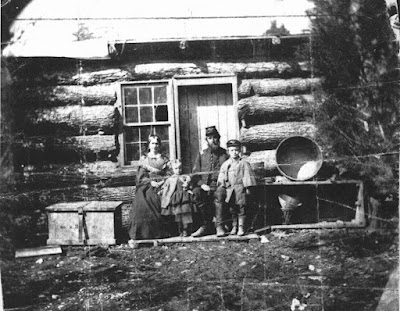
Samuel was killed in action on May 31, 1862 at Fair Oaks, Virginia, at the same time that his brother George lost an arm.
The Third Regiment’s chaplain, Rev. Joseph Anderson, wrote an expression of sympathy to the deceased’s family on June 2, 1862. “You will have received ere this reaches you,” Anderson wrote,
the saddening intelligence of the death of your noble son, and the maiming for life, if not the death, of another. There are times when a calamity is so overwhelming as to mock all efforts at consolation, and i really scarcely know how to approach you, under your sad bereavement, so as to be the minister of comfort to you both. But, if to know that Samuel Judd was the idol of not merely his own company, but also of the whole Regiment; if to know that the sympathies of them all are yours -- earnestly and deeply yours; if that remembrance of the fact that the cause for which he poured out his noble life was worthy of such a sacrifice; if bravery, courage and manly daring on that hard fought battle field, in which the Michigan Third crowned themselves with laurels, and decided the fortunes of the day, on one of the hardest fought battle fields of history of our country; and if to know that among the heroes of that day the deeds of your sons will live in the memory of all the witnesses of their bravery -- if all those and even more are any alleviation, or will bring any balm to your wounded spirits, then you have the satisfaction of knowing that all these are true; and that, while these cannot restore him that is gone, nor make him whole who is maimed, yet, certainly the cause and manner of your bereavement should be some alleviation of your grief; and, while it is natural that the parents bosom should heave, and the tear of sorrow fall, yet remember that his life was his country's; and when she demanded it, Samuel Judd nobly and willingly surrendered it. If a heathen poet, therefore, exclaimed: “It is honorable and glorious to die for our country,” how much more should a Christian parent be imbued with a higher feeling. Some years after the war Dan Crotty of Company F wrote of Judd’s death, “Oh, how many of our comrades we leave behind, fallen in defence of their Nation's flag. The brave and heroic Captain Samuel Judd, of Company A, is no more. He was killed on the skirmish line leading on his men. He sold his life well, however, for when his body was found three large rebels lay by his side, whom he had made bite the dust. The whole Regiment mourn his loss.”
At home in Grand Rapids the news of Judd’s death came as a shock. Rebecca Richmond, daughter of William Richmond, one of Grand Rapids leading citizens, wrote in her diary on June 4, 1862, “We received today very bad news from the Third Regiment which was engaged in the battle of Fair Oaks, Virginia on Saturday and Sunday last. The report is that Captain Samuel Judd is killed and . . . Geo. Judd . . . severely wounded, beside very many subordinate officers and privates of course. Our city is in a state of excitement and mourning and constantly expecting and dreading a confirmation of our worst fears!”
In late June of 1862, N. L. Avery was chosen by several of the leading citizens of Grand Rapids to go out to Fair Oaks soon after the battle and distribute hospital supplies, money etc. to the wounded men of the Old Third; he was also tasked with bringing home the remains of Samuel Judd. On July 2, 1862, Judd’s remains were returned to Grand Rapids and according to one report the turnout for the “return” of the body was most impressive. According to one local report,
The telegraph of Tuesday morning last, announced to our citizens that the earthly remains of this gallant soldier, in charge of N. L. Avery, Esq., would reach this city on the afternoon train from the east. The Masonic Fraternity, fireman, Military, and a large concourse of our citizens repaired to the depot to receive them. Upon the arrival of the cars a procession was formed, the Masonic fraternity taking charge of the corpse, and marched to McConnell's block; the bells of the city tolling, and the band with muffled drums beating, where the body in a metallic coffin, was deposited until Wednesday afternoon, when the last sad rites of burial of consigning ‘dust to dust’ of all that remained to earth of the late S. A. Judd was performed according to the Masonic ritual, Rev. S. S. N. Greely preaching the funeral sermon. The services were attended by the Grand Rapids Greys and other military, the several Fire companies, and an immense concourse of citizens. This sad scene has brought the war home to our very doors. The death of Captain Judd, who was universally respected by our citizens, and who was slain at the battle of Fair Oaks, gloriously fighting under the Stars and Stripes to preserve the inestimable blessings of our Union, has touched many a heart-chord in this community, and made us to feel the sad realities of war. This loss, though most keenly felt by his own family and relatives, is the loss of the whole community -- the Nation. Upon the rough and rugged path of the battle field he was ruthlessly slain by the murderous hands of rebels. He was rudely sent into the presence of Him who ‘ruleth all things well,’ where there are no wars or rumors of war, where all is peace, and love supreme prevades [sic] all, presides over all. And whilst we cherish and treasure up his memory in our heart of hearts, as one who fell valiantly fighting for the right -- the bravest of the brave -- let me earnestly pray for an influx of the Divine love that shall melt the hearts of obstinate rebels and again unite us in fraternal bonds of mutual sympathy and kindness, that we may again enjoy the blessings of a united, happy and prosperous people.” Samuel was interred in Fulton cemetery: block 7 lot 5.
Samuel had indeed been popular with many of the men of Company A, and quite a few of his former comrades subscribed to a fund to place substantial memorial built over his remains in Fulton cemetery, Grand Rapids. The
Grand Rapids Eagle wrote on June 13, 1863 that
a very appropriate and beautiful monument has just been completed and this day erected in the old City Cemetery, over the remains of our late esteemed fellow citizen, and lamented Captain Samuel A. Judd, who fell in the battle of Fair Oaks, bravely fighting under the Stars and Stripes, for Freedom and the Union. The monument is made of beautiful Italian marble, and is 11 feet high. Its base is made of 2 slabs of Ohio stone; its plinth is a square marble block 2 and a half feet high, with marble caps, on one side of which is chiseled the following inscription: ‘Samuel A. Judd, Captain of Company A, 3d Michigan Infantry volunteers, in the war for the Suppression of the Rebellion, killed in the Battle of Fair Oaks, Virginia, May 31, 1862, aged 28 years, 10 days’; and on the other side: ‘This monument was erected by members of his company, who loved him as a brother, obeyed with alacrity his commands, and will during life, cherish the remembrance of his courage and patriotism.’ The spire is a pillar of plain white marble, square and tapering in form, 6 and a half feet in height, and upon which is chiseled a sabre, and upon the other a double triangle, square and compass. The monument is the work of Wm. Laraway & company, and it speaks for itself in praise of the good taste and skill displayed on it, by this accomplished artist. And Charles Wright wrote home to his sister on August 9, 1863, “I am glad to hear that Cap. Judd has got a beautiful monument, and I expect to see it some day.”
In August of 1869 the Grand Army of the Republic Samuel Judd Post No. 49 in Grand Rapids was named in his honor. On August 5, “At a meeting . . . of the [G.A.R.], recently organized in this city, it was decided that the Post should hereafter be known and organized as ‘Judd Post No. 49, Department of Michigan.’ The name was chosen in honor of Captain Samuel A. Judd, of the Third Michigan Infantry, who went from this city at the commencement of the war and was killed at Fair Oaks, Virginia, while gallantly leading his command. He left many friends here by whom his virtues and his manly character will never be forgotten, and this society of veteran soldiers did well when they made choice of so honorable a name for their Post.”
In August of 1862 Clarissa applied for and received a widow’s pension (no. 415).
In 1868 she married John Kellogg of Massachusetts and subsequently reported herself as guardian when she applied for and was granted a pension on behalf of her children (no. 125349).
Following the death of her second husband in 1887, Clarissa, who was living in Holyoke, Hampden County, Massachusetts, applied for a renewal of her former widow’s pension in 1901 which was granted, drawing $20 per month, and $30 per month by 1922. By 1922 she was living at 102 Elm Street in Holyoke, Massachusetts.


